
Student Notebooks
To access your writer’s notebook, click on your name below.

To join your Zoom class meeting, please click the button below.
The passcode is: 888626
This Week

Click the button to access the story —>
Response to Literature Questions:
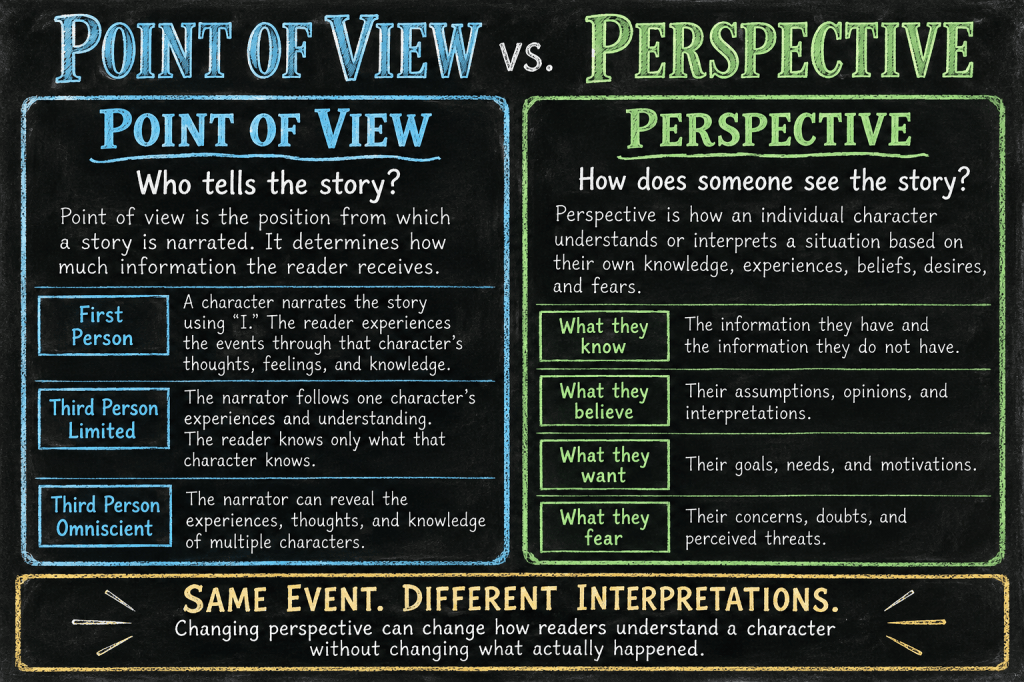
- In Chapter 13, Marvel attempts to escape Griffin’s control. What motivates his decision, and how does Griffin respond? What does their interaction reveal about the relationship between the two characters?
- Consider the events surrounding the attack in Port Stowe and Marvel’s growing desperation. How does Wells show that Griffin’s invisibility gives him power while also creating complications for his plans?
- In Chapter 14, Dr. Kemp encounters newspaper reports about the Invisible Man. How does the information presented to the public compare with what the reader already knows? What does this difference reveal about how stories can change as information spreads?
- Griffin’s actions increasingly affect people who have little understanding of his situation. Choose one event from these chapters and explain how it might be interpreted differently by Griffin and by someone affected by his behavior.
- Consider Griffin’s decision to seek refuge with Dr. Kemp. What does this decision suggest about Griffin’s circumstances, priorities, or limitations? Support your interpretation with details from the story.
- In Chapter 16, Griffin begins revealing more about himself and his experiences. Does learning more about Griffin make him easier to understand, more sympathetic, or more troubling? Explain the distinction using evidence.
- Think about Griffin’s behavior throughout Chapters 13-16. To what extent are his growing problems caused by his invisibility, and to what extent are they caused by his own decisions? Develop an argument that considers both possibilities.
Homework
Week 5:
- Answer the response to literature questions above
- Finish rewriting the scene in chapter 7 from Griffin’s perspective
- Read and annotate The Invisible Man chapters 13-16
Homework is due by 7 am on the day of your class. Any homework submitted after that is considered late. That means, you are not allowed to finish it right before class. If you do, it will still be incomplete as I will have already checked your work. Please plan ahead!
Archives
Week 4:
- Answer the response to literature questions above
- Read and annotate The Invisible Man chapters 9-12
- Griffin’s invisibility gives him abilities that other people do not have, but it also creates limitations. Identify two advantages and two disadvantages of being invisible that become apparent in these chapters. Which seems more significant at this point, the advantages or the disadvantages? Explain.
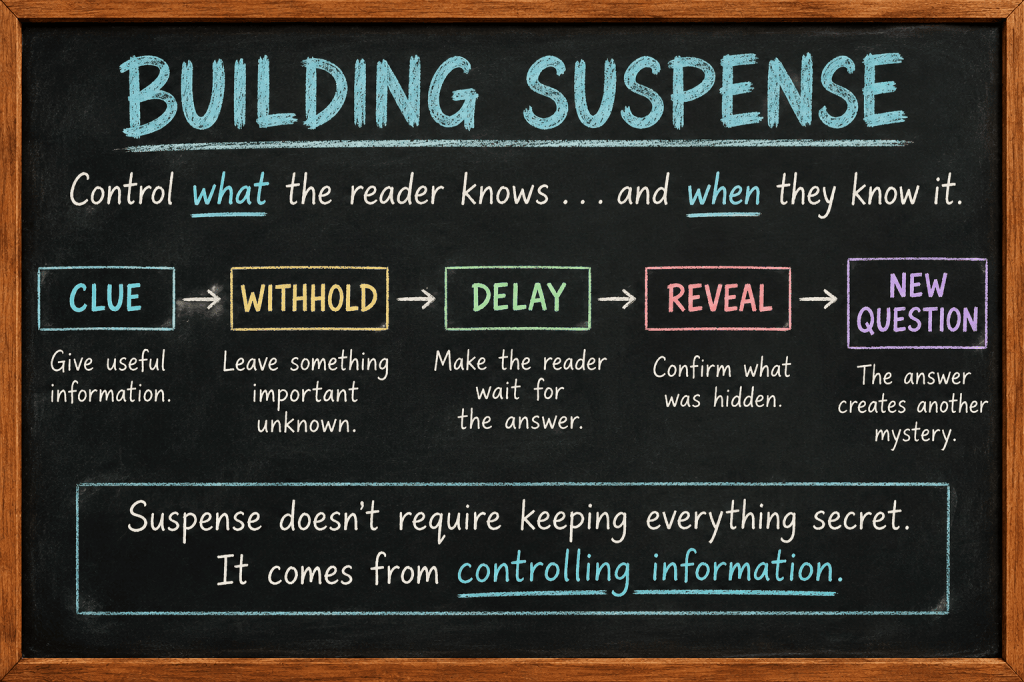
- How does Griffin use fear to influence or control other people in Chapters 8-10? Choose a specific example and explain why fear is effective, or ineffective, in getting him what he wants.
- Choose one decision Griffin makes in these chapters that creates additional problems for him. What does he choose to do, what are the consequences, and what could he reasonably have done differently?
- How does the conflict change once Griffin is no longer simply trying to hide his identity? Identify what Griffin appears to want now and what stands in his way.
- Compare the way Griffin sees his own situation with the way the people around him see it. Where do their perspectives differ most? Which perspective do you currently find more reasonable, and why?
- Power has begun to emerge as an important topic in the novel. What kind of power does invisibility give Griffin? Based on his behavior so far, write a possible theme statement about power that Wells may be developing. Support it with evidence.
- Imagine Wells removed Griffin’s invisibility but kept his personality, goals, and circumstances the same. Which of the conflicts in these chapters would still exist? Which would disappear? What does your answer suggest about whether Griffin’s biggest problem is his invisibility or Griffin himself?
Week 3:
- Answer the response to literature questions above
- Read and annotate The Invisible Man chapters 5-8 (Click the button below to access the book)
Response to Literature Questions:
- Iping is not simply a place where the story happens. How does Wells use the setting of the village to affect the events in Chapters 1- 4? Choose specific details about Iping and explain why this story might unfold differently in a larger or less close-knit community.
- In The Machine Stops, we discussed the difference between what people accept as normal and what an outside observer might question. Identify something the people of Iping seem to consider normal or reasonable that you question as a reader. What does this reveal about the community?
- Choose one event from Chapters 1- 4 that you think Wells included for a reason beyond simply moving the plot forward. What else does the event accomplish for the story?
- In The Machine Stops, we learned that a topic is not the same as a theme. Identify one topic that is beginning to emerge in The Invisible Man. What might Wells eventually say about that topic? Write a possible theme statement and explain what evidence from Chapters 1- 4 led you to it.
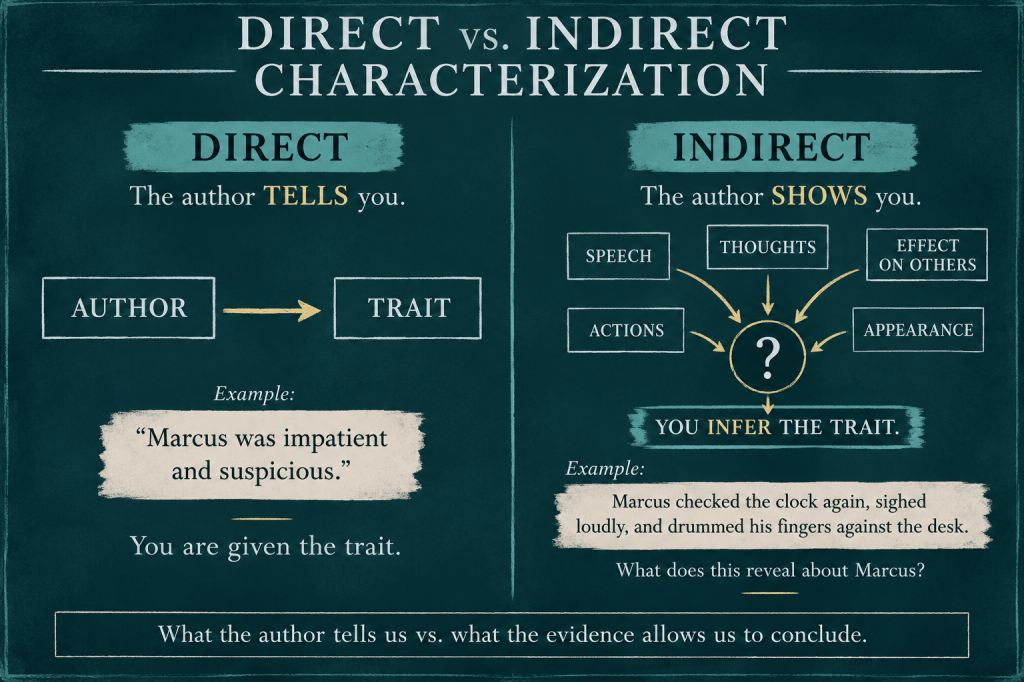
- Both Forster and Wells deliberately withhold information from the reader. Choose one important piece of information Wells has not yet given us. How does not knowing that information affect your experience as a reader?
- Good readers notice when an author makes something seem important before they fully understand why. Identify one detail, object, event, or piece of information from Chapters 1- 4 that you think may become important later. Explain what makes you think Wells wants us to pay attention to it.
- After four chapters, what is the most important question you think Wells wants the reader asking? Explain why that question matters and identify at least two details from the novel that caused you to ask it.
Week 2:
- Answer the response to literature questions above
- Read and annotate The Invisible Man chapters 1-4 (Click the button below to access the book)
Response to Literature Questions:
Write a thoughtful, well-developed response that clearly answers the question and supports your interpretation with specific evidence from The Machine Stops.
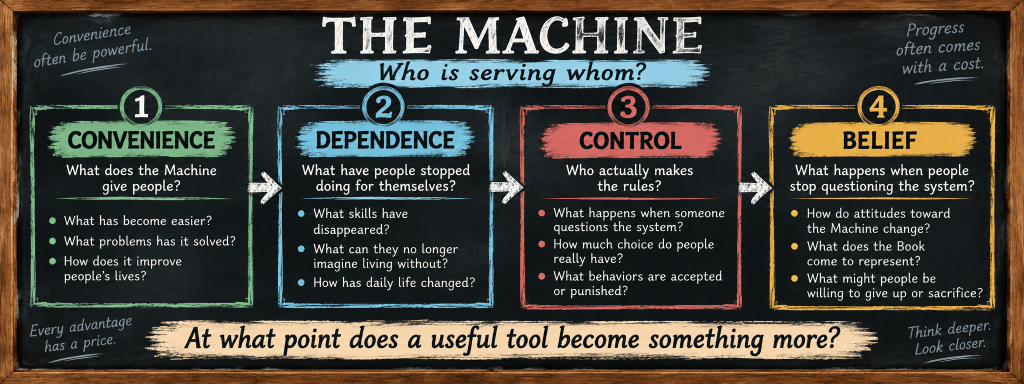
#1 Who Gave the Machine Its Power?
By the end of the story, humanity is completely dependent on the Machine. Did the Machine take control of humanity, or did humanity willingly surrender control to it?
Defend your position using specific evidence from the story.
#2 Progress or Decline?
The society in The Machine Stops is far more technologically advanced than Forster’s own world. Has humanity actually progressed?
Develop an argument explaining whether the society represents human progress, human decline, or a combination of both. Support your interpretation with specific evidence from the story.
#3 The Most Dangerous Loss
The people in Forster’s society have lost many things: physical strength, independence, direct experience, connection with nature, meaningful human contact, curiosity, and critical thought.
Which loss is ultimately the most dangerous?
Explain why and show how that loss contributes to the society Forster created. Support your interpretation with specific evidence from the story.
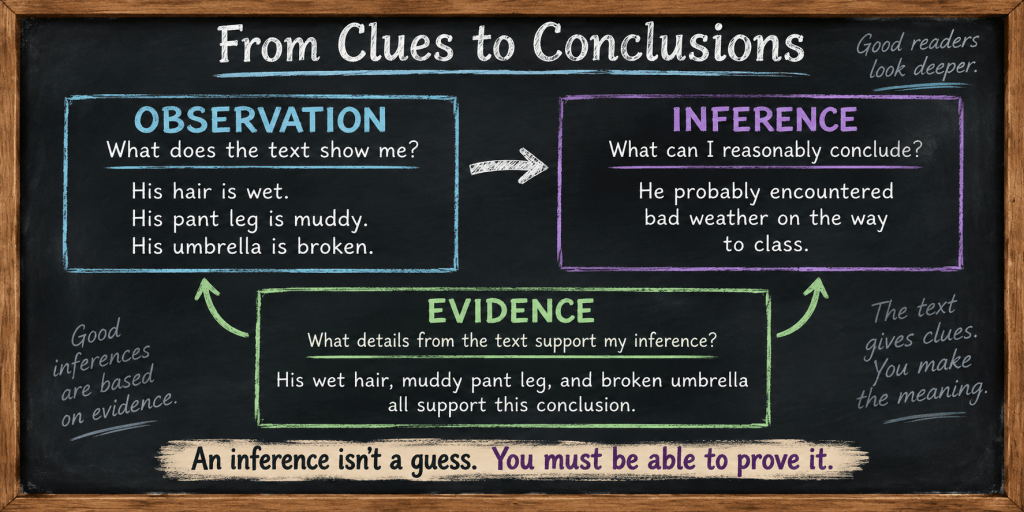
- Forster never gives readers a simple explanation of how this society became the way it is. Based on the details in Part I, what can you infer about what humanity has gained and what it has sacrificed? Support your interpretation with specific evidence.
- Vashti considers her world normal, while a modern reader is likely to find parts of it disturbing. Choose one detail that Vashti accepts without question. What does her reaction allow you to infer about the values of her society?
- Kuno is uncomfortable with aspects of life that everyone else appears to accept. What can you infer about Kuno from the things he questions or desires? Explain how Forster uses the contrast between Kuno and Vashti to reveal information about their world.
- What weakness in this society is already visible in Part I? Make a prediction about how that weakness could create conflict later in the story and defend your prediction with evidence.
Homework:
- Read and annotate Part 1, 2, and 3
- Answer the response to literature questions

