Student Notebooks
To access your writer’s notebook, click on your name below.
To join your Zoom class meeting, please click the button below.
The passcode is: 888626
Academy Logbook – Weekly Warm Up
Every week, you will add a new entry to your Academy Logbook as you explore the world of IK2W. You might uncover a mystery, discover a hidden piece of Academy history, solve a problem, or help shape what happens next.
But here is where it gets interesting: you are not just reading the history of the IK2W Academy. You are helping write it.
Throughout the quarter, I will choose some of the most creative, thoughtful, and well-written student entries to become part of the Official Academy Logbook, where they will be published for others to read. Will one of your entries become part of Academy history?
Click the button below to open the Official Academy Logbook and see what has already been discovered. (Note: It will take a week of two for entries to start appearing)
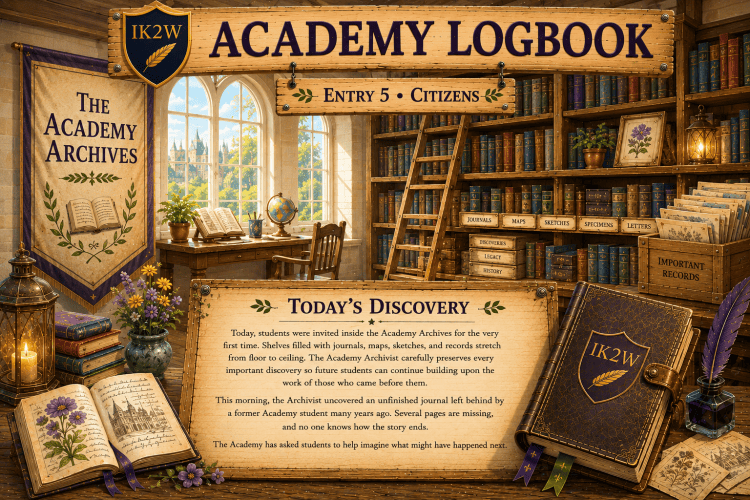
Study the clues provided by the unfinished journal and develop a logical continuation. Write the missing pages while keeping your ideas consistent with the evidence already discovered.
Project #2
We will be writing a Halloween story that is beyond the obvious! Your story will be a minimum of 2500 words and a maximum of 3000 words. And the best part is, this will be a competition. The judges will be none other than our own Young Writer’s Alliance.
- It should have a well thought out plot (story hill)
- Avoid our three outlawed endings
- Your story must have a title.
Step 1: Imagine
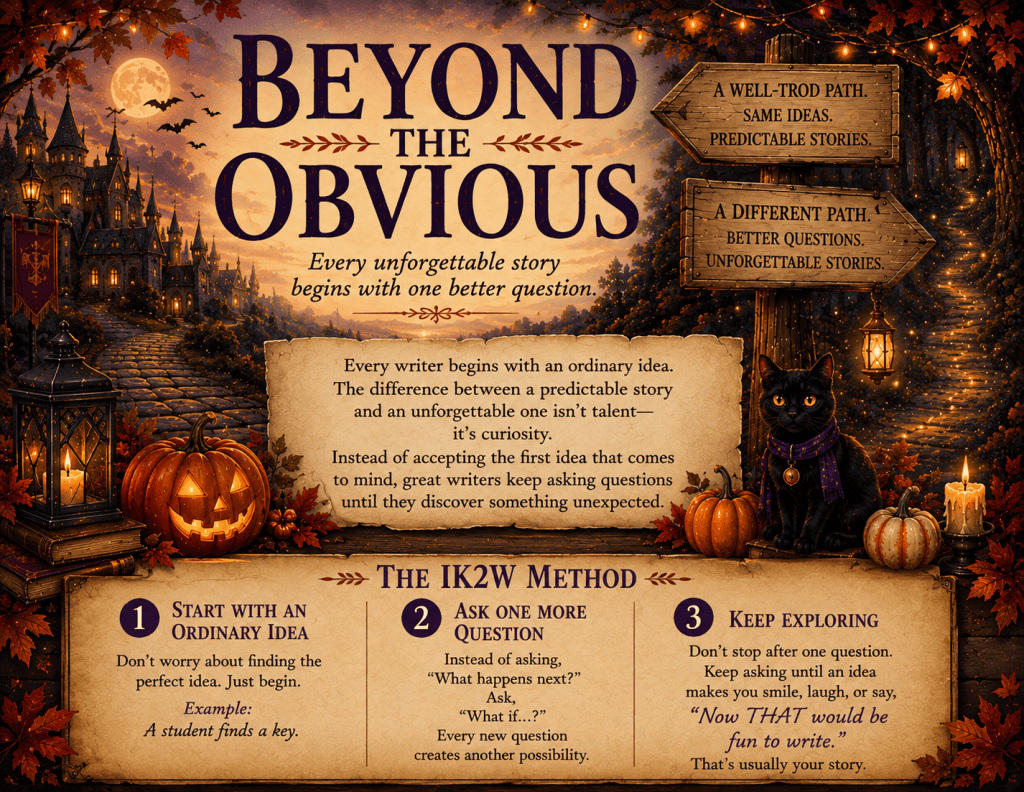
Step 2: Question
Once you have your idea, it’s questions time:
- What makes this concept different from a familiar story?
- Who would have the most to gain or lose?
- What conflicting motivations could drive the characters?
- What assumptions might the characters make that turn out to be wrong?
- What unexpected connection could deepen the story?
- How might one decision create consequences nobody anticipated?
- What could force the protagonist to make a difficult choice?
- What larger question could emerge from the situation?
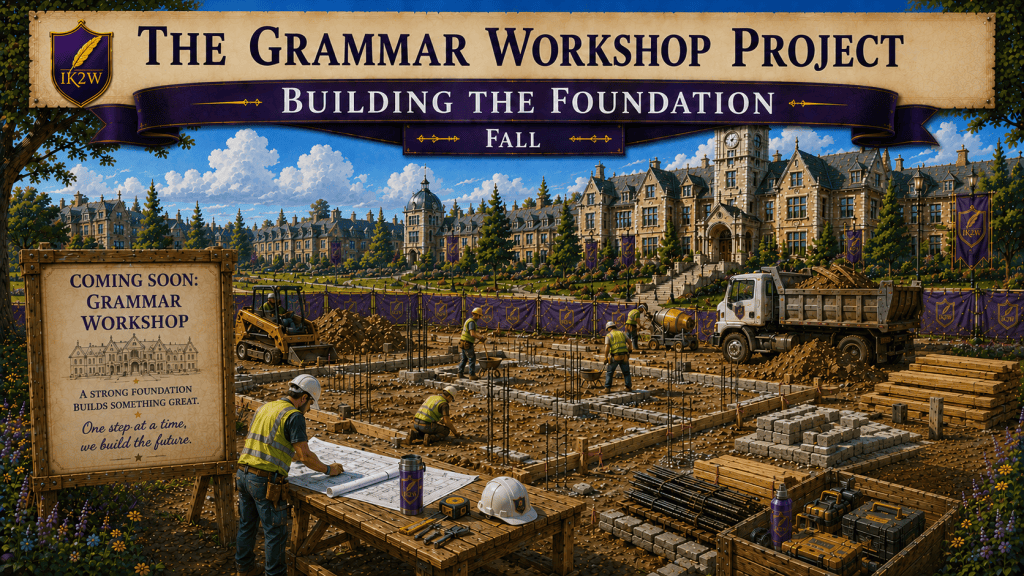
What we are building this week…
Homework
Week 5:
Homework is due by 7 am on the day of your class. Any homework submitted after that is considered late. That means, you are not allowed to finish it right before class. If you do, it will still be incomplete as I will have already checked your work. Please plan ahead!
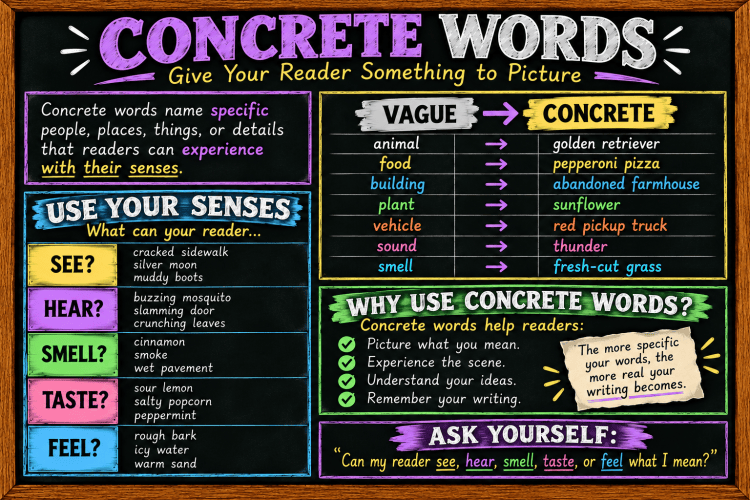
- Logbook entry: Finish what you did not complete in class. See above for assignment details. (Week 5 Logbook). Don’t forget to follow the 1/5 rule and use concrete words.
- Journal: Keep working in your journal. Remember, if you are stuck, go to the “What goes in here?” page in your notebook for ideas. (Entry 5)
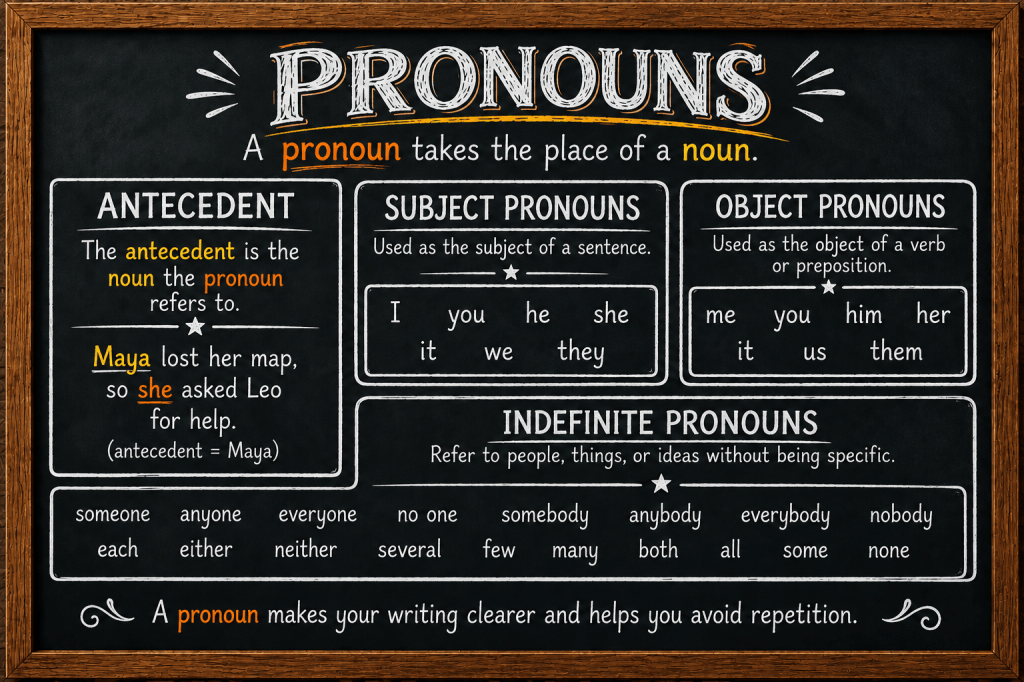
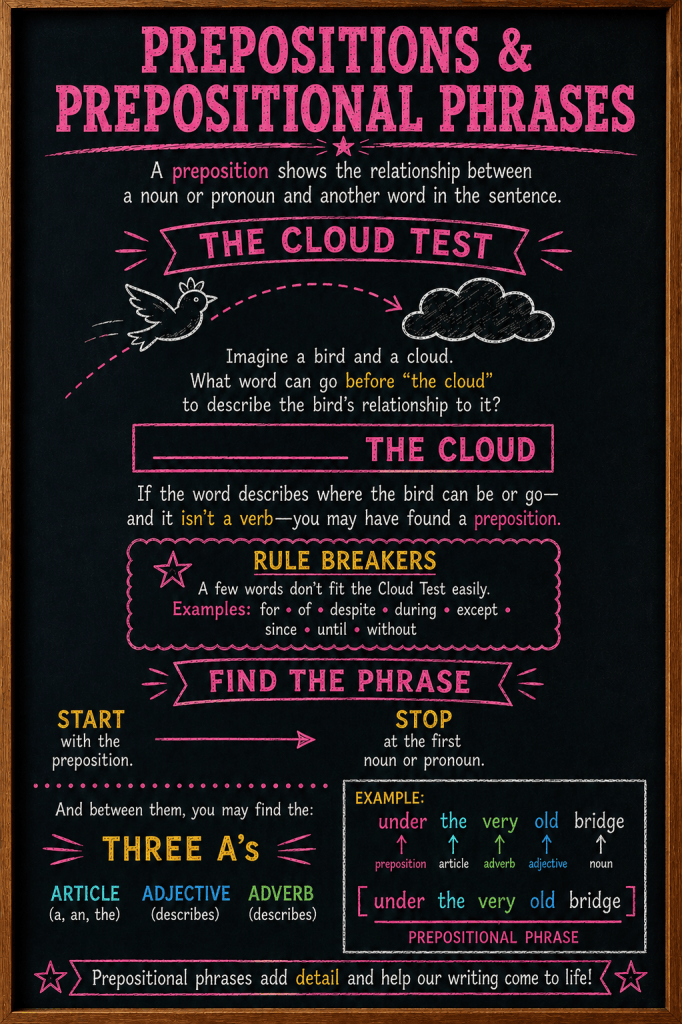
- Grammar: Finish your pronoun sentences in your notebook (W5 Grammar). Don’t forget to double check your work! And if you have corrections to make to week 1,2, 3, and 4, you are responsible for that.
- Project 2 work: Finish step 1 and 2. (Step 1 = Project 2 tab, Step 2 = Question tab)
- Project 1 work: Make final revisions to your project 1 piece using my comments. Next week, this will publish as is.
Note: I have listed in parenthesis ( ) where each assignment should go in your notebook. If it is not in the correct section, I will think your homework is incomplete.
Archives
Week 4:
- Logbook entry: Finish what you did not complete in class. See above for assignment details. (Week 4 Logbook). Don’t forget to follow the 1/5 rule and use concrete words.
- Journal: Keep working in your journal. Remember, if you are stuck, go to the “What goes in here?” page in your notebook for ideas. (Entry 4)
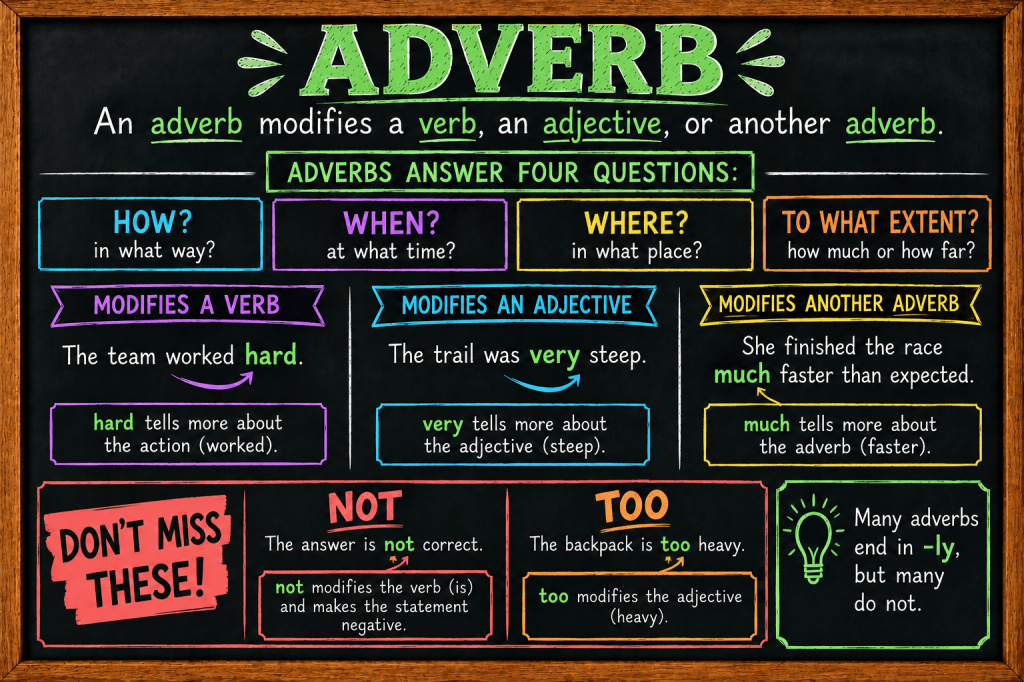
- Grammar: Finish your adverb sentences in your notebook (W4 Grammar). Don’t forget to double check your work! And if you have corrections to make to week 1,2, and 3, you are responsible for that.
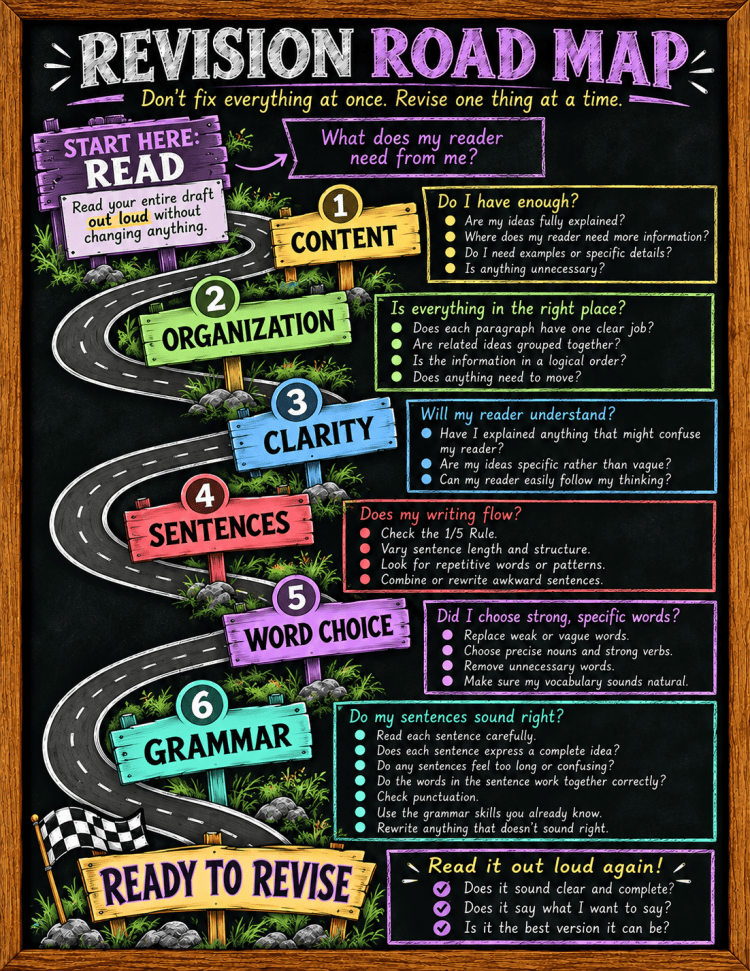
- Project work: Finish step 5. (Step 5 = Revise) You must follow the Revision Road Map above.
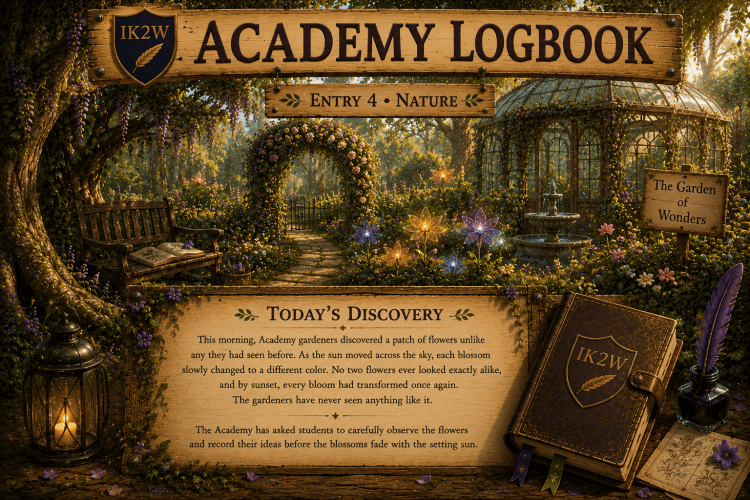
The Academy botanists have developed two different theories explaining why the flowers change color throughout the day. Develop your own theory and support it with logical reasoning and evidence from your observations.
Step 5: Revise
Week 3:
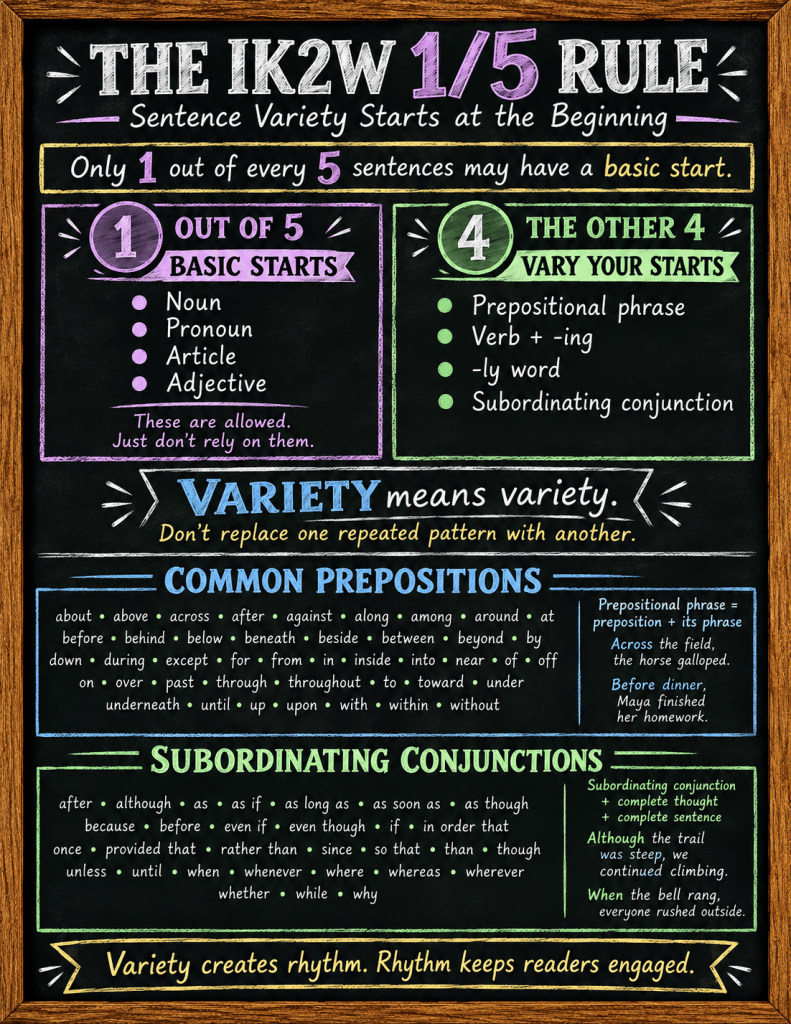
- Logbook entry: Finish what you did not complete in class. See above for assignment details. (Week 3 Logbook) Finish revising all three weeks to make sure they follow the 1/5 rule.
- Journal: Keep working in your journal. Remember, if you are stuck, go to the “What goes in here?” page in your notebook for ideas. (Entry 3)
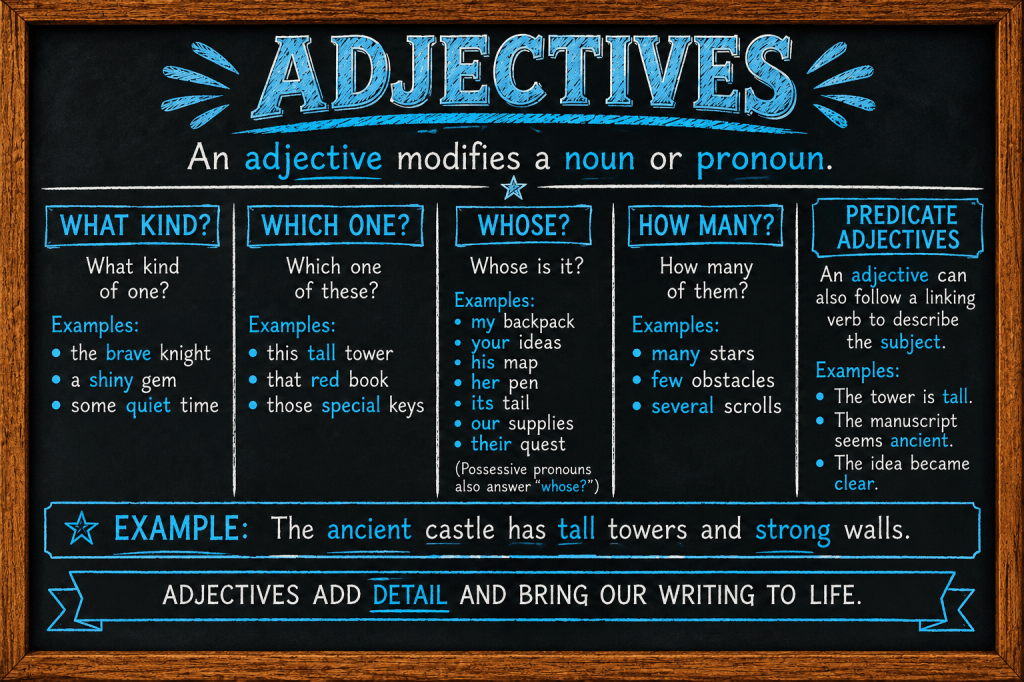
- Grammar: Finish your adjective sentences in your notebook (W3 Grammar). Don’t forget to double check your work! And if you have corrections to make to week 1 & 2, you are responsible for that.
- Project work: Finish step 4. (Step 4 = Draft)
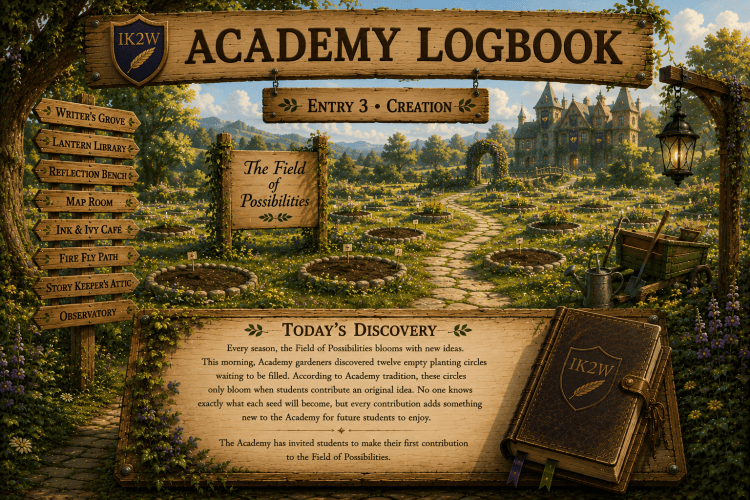
This week’s assignment:
The Field of Possibilities is growing larger each year. Propose one permanent addition that would improve the Academy for future students. Explain both the benefits and any possible challenges your idea might create.
Step 4: Draft
This week, you will turn your outline plan into complete sentences. Remember, you do not have to revise this week… Just draft!
Week 2:
- Start exploring the IK2W World! This week: The Writer’s Grove, The Lantern Library, and The Ink and Ivy Cafe. Bonus: Read “The Elite Sabotage” by Raymond on the 2026 Anthology. It takes place in the world of IK2W.
- Logbook entry: Finish what you did not complete in class. See above for assignment details. (Week 2 Logbook)
- Journal: Keep working in your journal. Remember, if you are stuck, go to the “What goes in here?” page in your notebook for ideas. (Entry 2)
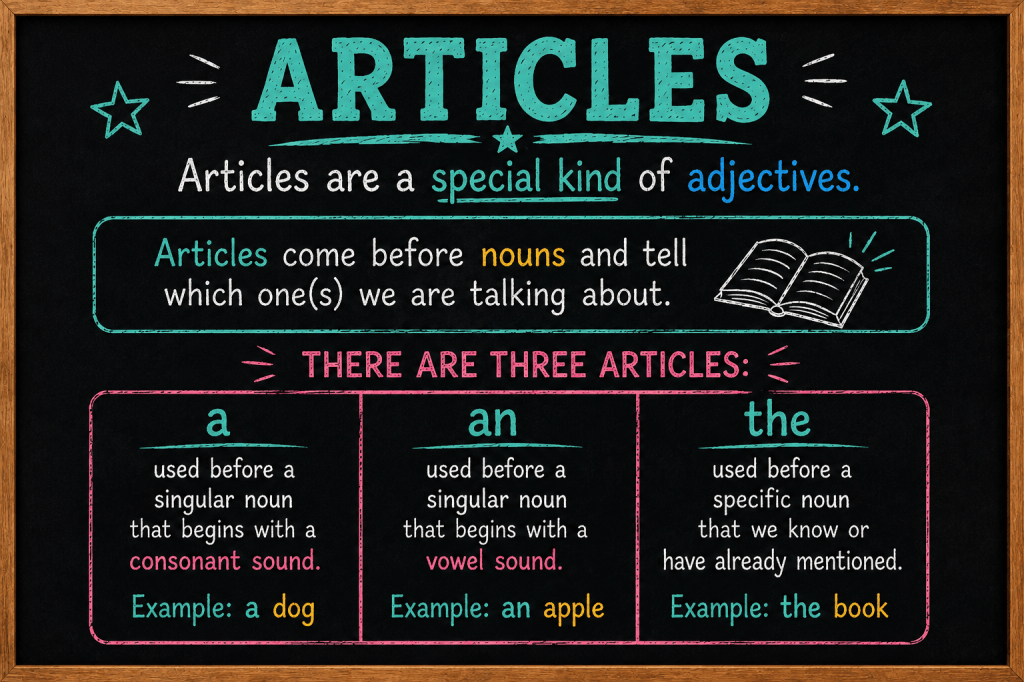
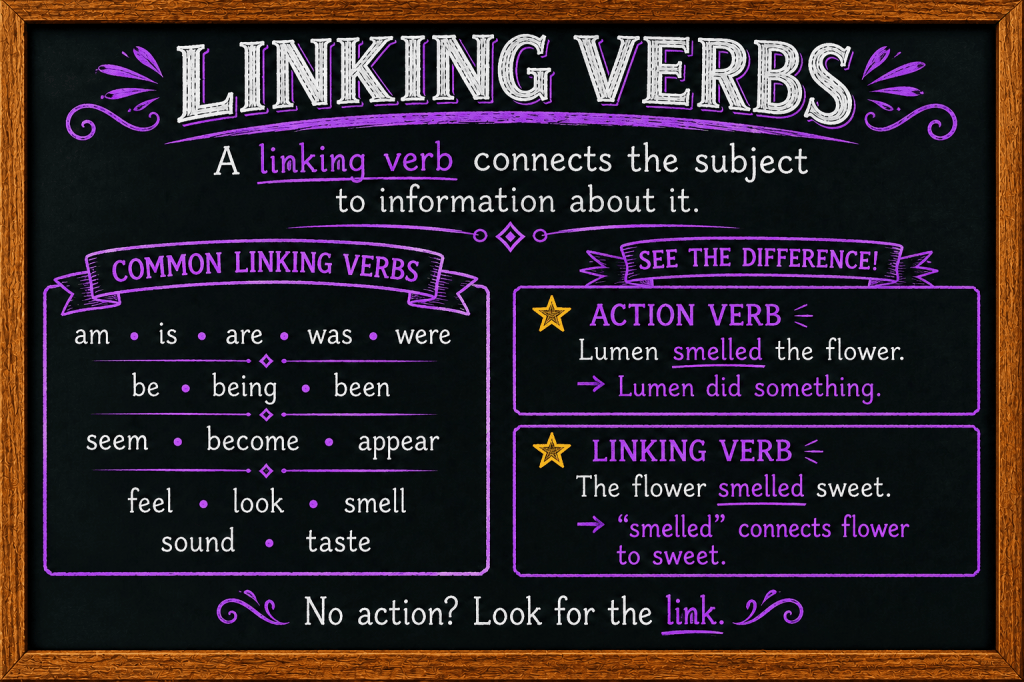
- Grammar: Finish your verb sentences in your notebook (W2 Grammar). Don’t forget to double check your work! And if you have corrections to make to week 1, you are responsible for that.
- Project work: Finish step 3. (Step 3 = Organize)
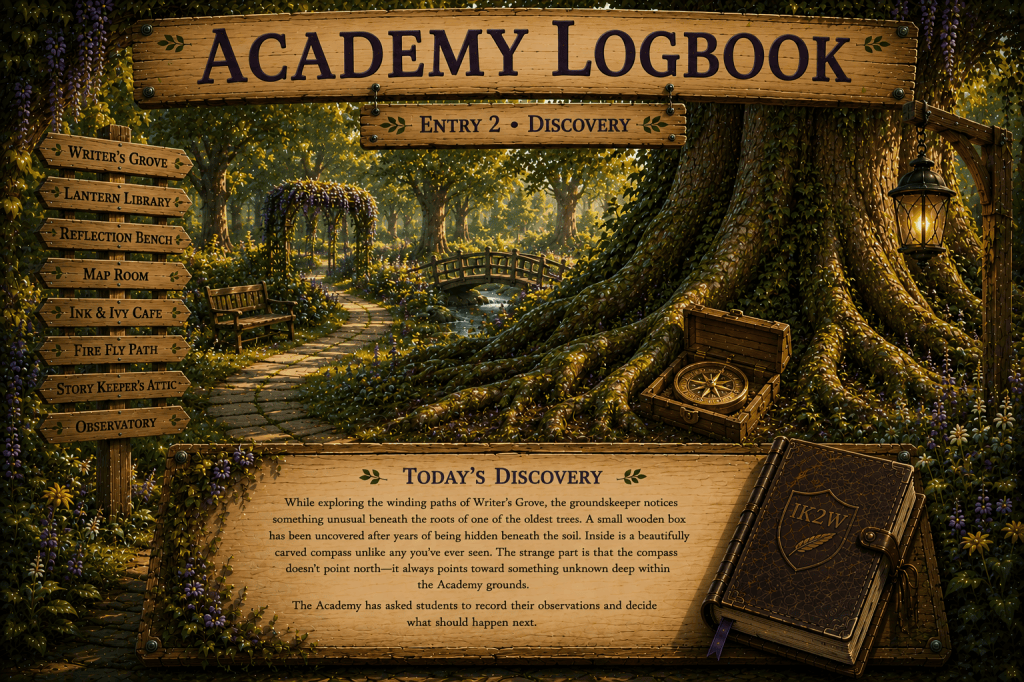
This Week’s Assignment:
The compass appears to point somewhere different depending on who is holding it. Develop a theory explaining how the compass works. Support your theory with logical reasoning and details from the discovery.
Project 1: Step #3
Week 1:
- Start exploring the IK2W World! This week: The Story of Flicker, Introduction, IK2W Academy, and The Firefly Path. Of course, you are welcome to visit more locations. The button to enter the world is at the top of this page.
- Logbook entry: Finish what you did not complete in class. See above for assignment details. (Week 1 Logbook)
- Journal: Keep working in your journal. Remember, if you are stuck, go to the “What goes in here?” page in your notebook for ideas. (Entry 1)
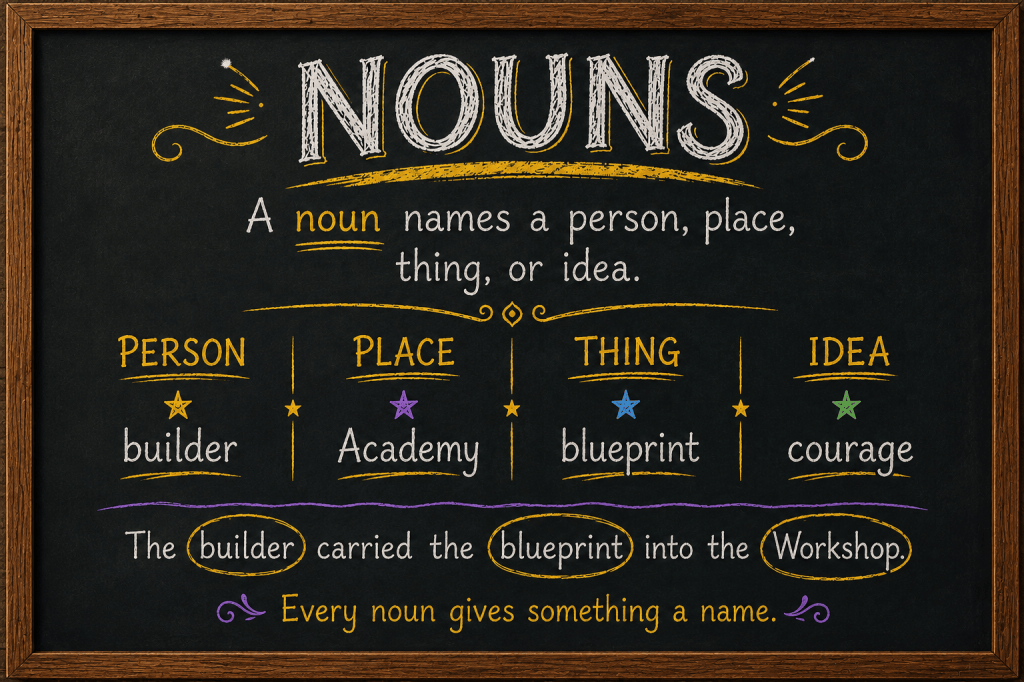
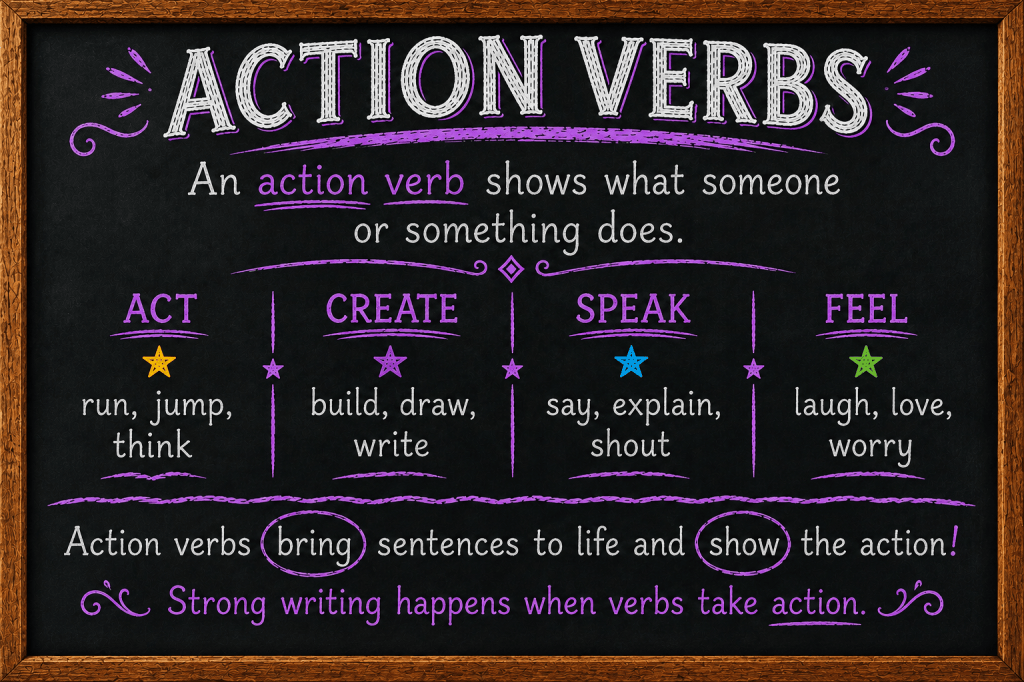
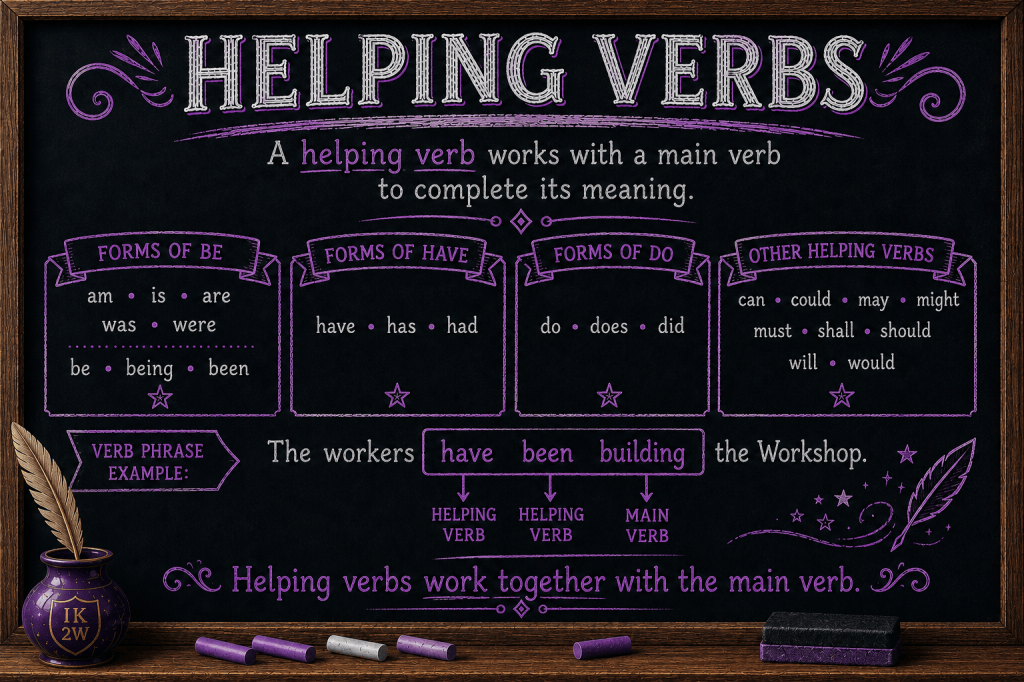
- Grammar: Finish your noun & pronoun sentences in your notebook (W1 Grammar). Don’t forget to double check your work!
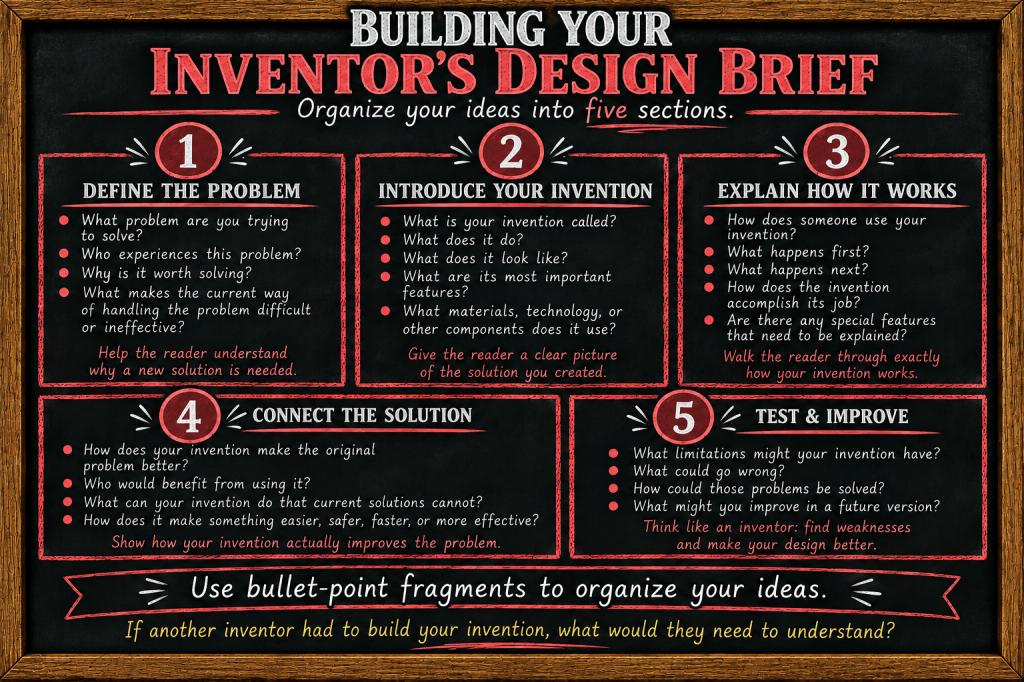
- Project work: Finish step 1 & 2. (Project 1 Invention for step 1 & Question for step 2) The questions you need to ask and answer are above. Make sure to copy and paste them into your notebook and put a lot of thought into your invention. Be ready to explain it next week.
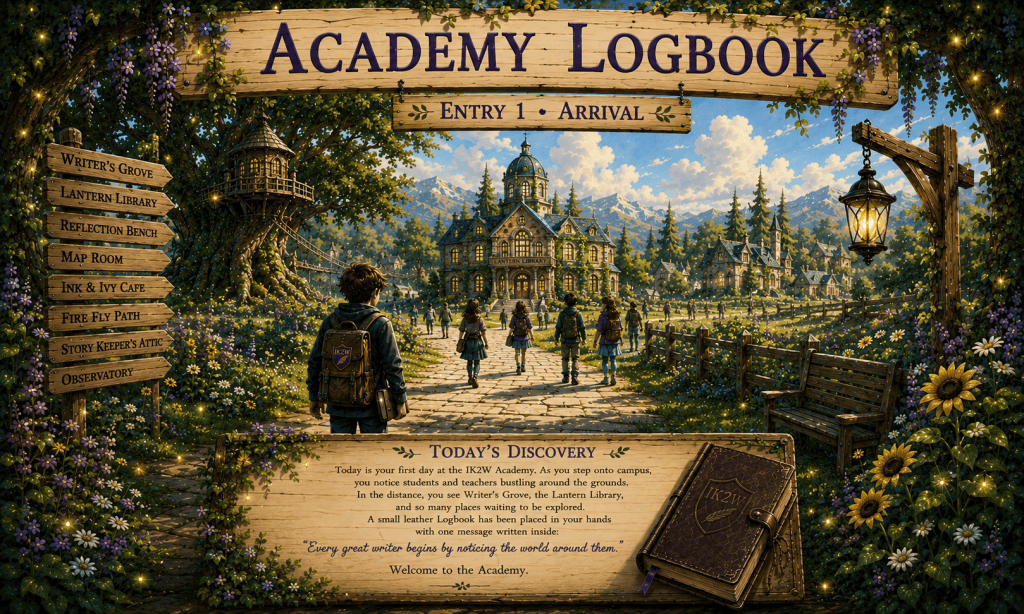
Every building at the Academy was created with a purpose. Choose one location and explain how its design helps writers grow. Then recommend one improvement that would make it even more effective.
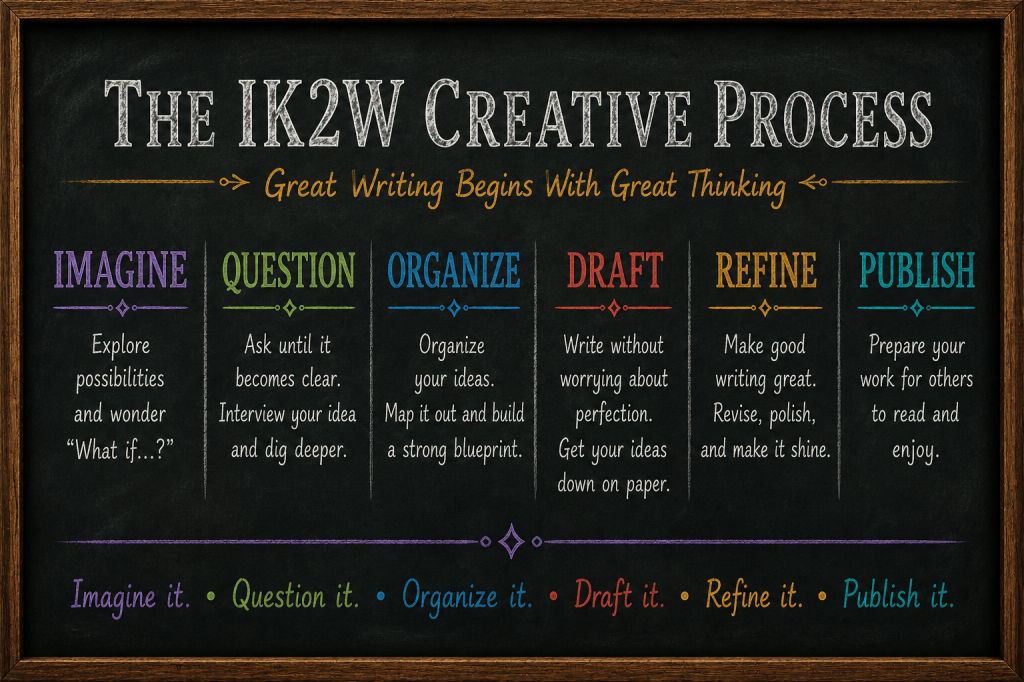
Step 1: Imagine
Great inventions often begin with a simple thought: “There has to be a better way.” Instead of immediately trying to invent something, begin by noticing problems.
Think about your own life, your family, school, animals, transportation, sports, technology, the environment, entertainment, or everyday tasks.
- What is something that annoys me?
- What takes too much time?
- What is unnecessarily difficult?
- What do people frequently forget?
- What is something people struggle to do?
- What could be safer?
- What could be easier?
- What could be more efficient?
- What could technology help us do better?
- What problem do I wish someone would solve?
- What doesn’t exist yet that I wish did?
Begin with the problem, not the invention. “What could be better?” Sometimes the first solution will be obvious. Push beyond it.
Imagine several possible ways to solve the problem before choosing the idea you think has the most potential.
Step 2: Question
Now put your invention to the test. An interesting idea is only the beginning. An inventor has to think about whether the idea could actually solve the problem it was designed to fix.
- What problem does my invention solve?
- Who experiences this problem?
- Who would use my invention?
- What exactly does my invention do?
- How does it work?
- What does it look like?
- What is it made from?
- How big or small is it?
- Does it need electricity, batteries, an app, or another source of power?
- How does someone use it?
- What happens from the moment someone starts using it until the task is complete?
- Does anything similar already exist?
- How is my invention different?
- Could my invention accidentally create another problem?
- Is it safe?
- Is it practical?
- What could go wrong?
- How could I improve it?
- What is the most important feature of my invention?
- Why would this invention make someone’s life better?